Answers to common questions
Is it safe to go into a room with water damage?
Not always. Stay out if water touches outlets, cords or the electrical panel. Turn off the power at the breaker only if you can reach it while dry. Standing water can hide sharp objects and carry germs. Floors can also get slick or weak. If you are unsure, stay out and ask a local provider in our network what to do next.
How fast do I need to act after a leak or flood?
Quickly. Wet drywall, wood and carpet can start to grow mold in a day or two, and the longer things stay wet, the more they can warp. Many providers can respond quickly, but availability varies. Request a callback to check provider availability, then take photos and shut off the water source if you can do it safely.
What should I do first while I wait for help?
Stop the source if you can, like a burst pipe or a running appliance. Turn off power to wet areas only if it is safe. Take photos and video of everything. Move small items and rugs to a dry spot. Do not use a regular vacuum on water. Then reach out to a local provider for the next steps.
Will my homeowners insurance pay for water damage?
It depends on your policy and what caused the water. Some policies may cover sudden damage, like a burst pipe. Many do not cover slow leaks or flood water from outside. Check your policy and ask your insurer. Providers can often help document damage for a claim, with photos, notes and moisture readings.
How long does it take to dry out a home?
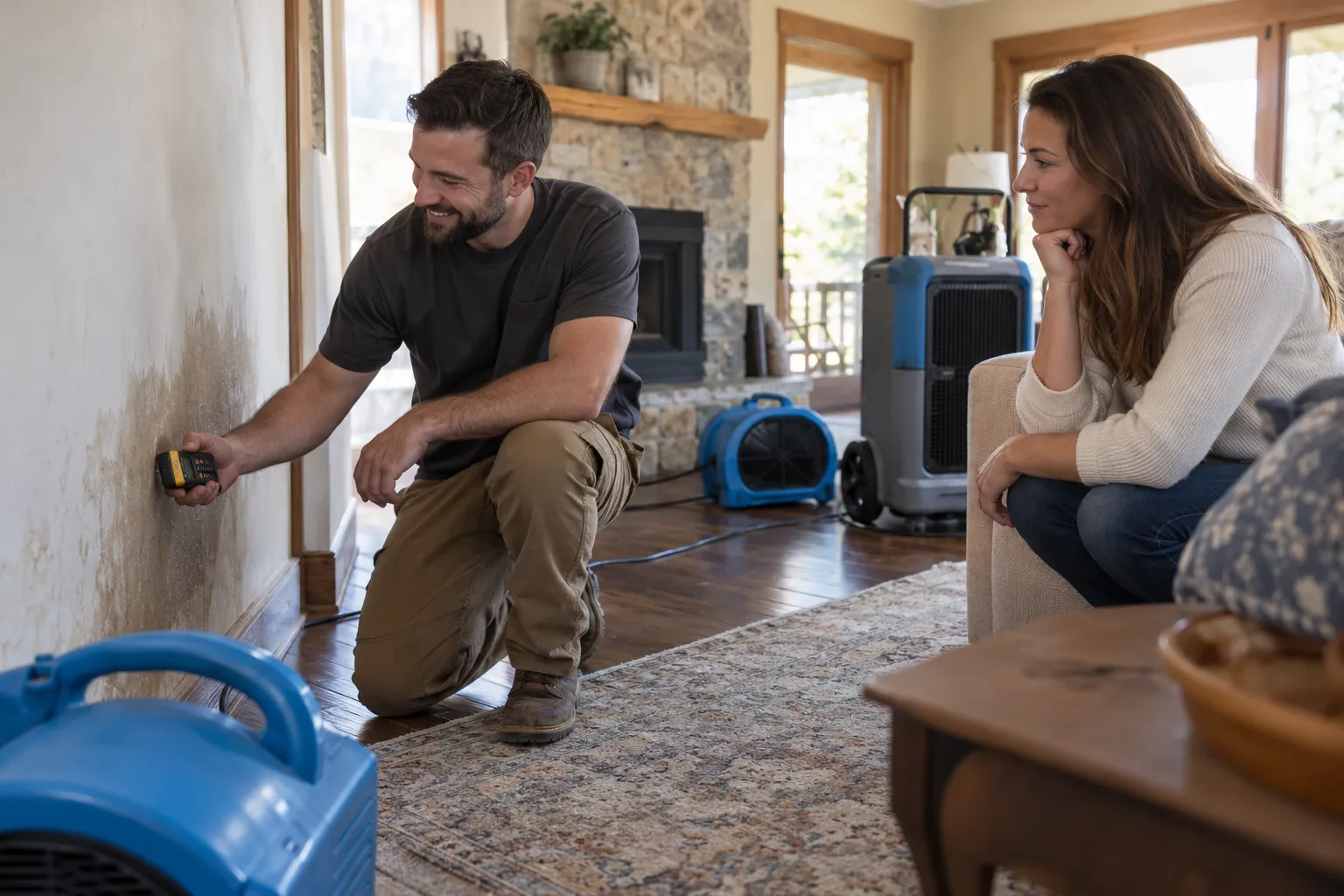
Most jobs take a few days to a week. Small spills dry faster. Soaked floors, walls and basements take longer. Providers use fans and dehumidifiers, which pull moisture out of the air, and they check moisture levels as they go. The job is done when readings return to normal, not when things just feel dry to the touch.
Can I dry the space myself with fans and towels?
You can handle a tiny spill that way. For bigger leaks, it rarely works well. Water soaks into walls, subfloors and insulation, where you cannot see it. That hidden moisture can lead to mold and rot. A provider uses meters to find wet spots. Doing it right protects the house and its resale value.
How do I know if mold is a problem?
Look for a musty smell, dark spots, peeling paint or bubbling walls. Mold often shows up after water sits for a day or two. Do not scrub it dry or stir it up. Keep kids and pets away. A local provider can check the area, explain what they find and suggest a plan.
How can I prevent water damage in the future?
Test your sump pump, the pump that moves water out of a basement, before spring and heavy storms. Clean gutters and point downspouts away from the house. Check hoses, water heaters and pipes for wear. Insulate pipes before deep frost sets in. Know where your main shutoff valve is, so you can act fast.