Ready to Get Help?
Request an estimate or ask a question. Callmonitoring Restoration will connect you with an independent local provider in the Greater Lansing area. No obligation.
No obligation
Talk to a local provider today
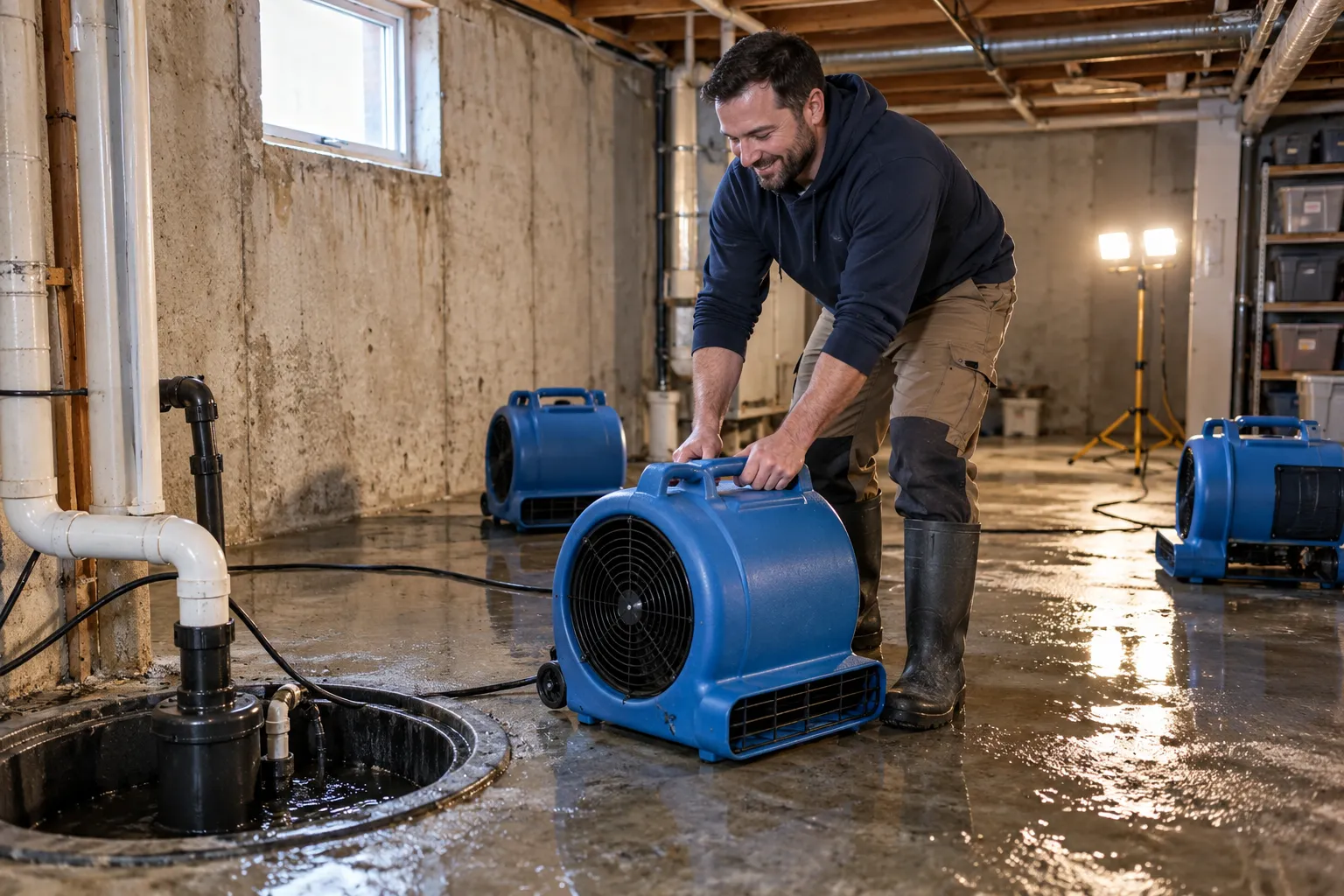
Water in your house is stressful, especially the first time. You do not need to know the trade words. Callmonitoring Restoration is a referral service. It links Holt homeowners with independent providers in our network who dry and repair water-damaged homes. This page walks you through the first hour, the hidden signs, the cost, the timeline and the questions to ask. Dry it right, and protect the house.
Take a breath. You can do this one step at a time. Work through the list in order.
Homes in Holt and across the region deal with spring flooding, hard storms and deep winter frost. A frozen pipe can split and then leak as it thaws. A sump pump (a small pump that moves water out of a basement) can quit during a heavy storm. Any of these can start a leak fast.
Water does not stay where you can see it. It soaks into wood, drywall and insulation. The surface may look fine while the wall behind it stays wet.
Watch for these clues:
Older frame houses and full basements can hide moisture for a long time. Mold (a fuzzy growth that loves damp spots) can start within a couple of days. A provider can use a moisture meter. That is a handheld tool that reads how wet a material is. It finds wet spots your eyes miss.
Costs vary a lot from job to job. As a rough U.S. guide, a small cleanup in one room often runs from a few hundred dollars to around $1,500. A mid-size job with drying equipment may run $1,500 to $5,000. A large flood, or dirty water from a sewer backup, can reach $5,000 to $15,000 or more.
These things move the number:
Always get a written quote before work starts. Some policies may cover sudden damage, so check your policy. Providers can often help document the damage for a claim.
Request a callback to check provider availability for your Holt home.
Every home differs. Still, most jobs follow the same path.
1. Visit and check. The provider looks over the home and finds the wet areas. 2. Water extraction. Pumps and vacuums pull standing water out. 3. Structural drying. Fans and dehumidifiers dry the walls, floors and framing. This often takes a few days. 4. Readings. The provider checks moisture again to be sure things are dry. 5. Cleanup and repair. Damaged parts come out, and the home is put back in order.
Good drying protects your home's value. Wet wood left behind can cause rot and odor later, and buyers notice that.
You are the customer. Ask plain questions and expect plain answers.
If an answer sounds vague, ask again. A good provider is glad to explain.
You do not have to figure this out alone, Holt. Callmonitoring Restoration can point you to independent providers in our network, so you can compare and choose with confidence.
We explain each step and each trade term in a few simple words, so nothing about your water damage feels like a mystery.
Providers in our network are separate businesses. They do the work, and you pick the one that fits your home.
Proper drying helps stop rot, mold and odor, which protects your home and its value if you sell later.
Ask the provider for a written estimate before work begins, so you know what the job includes and can compare your choices.
Request an estimate or ask a question. Callmonitoring Restoration will connect you with an independent local provider in the Greater Lansing area. No obligation.
Request an estimate or ask a question. Callmonitoring Restoration will connect you with an independent local provider in the Greater Lansing area. No obligation.
No obligation