Need flooded basement cleanup in Lansing?
Request an estimate or ask a question. Callmonitoring Restoration will connect you with an independent local provider in the Greater Lansing area. No obligation.
No obligation
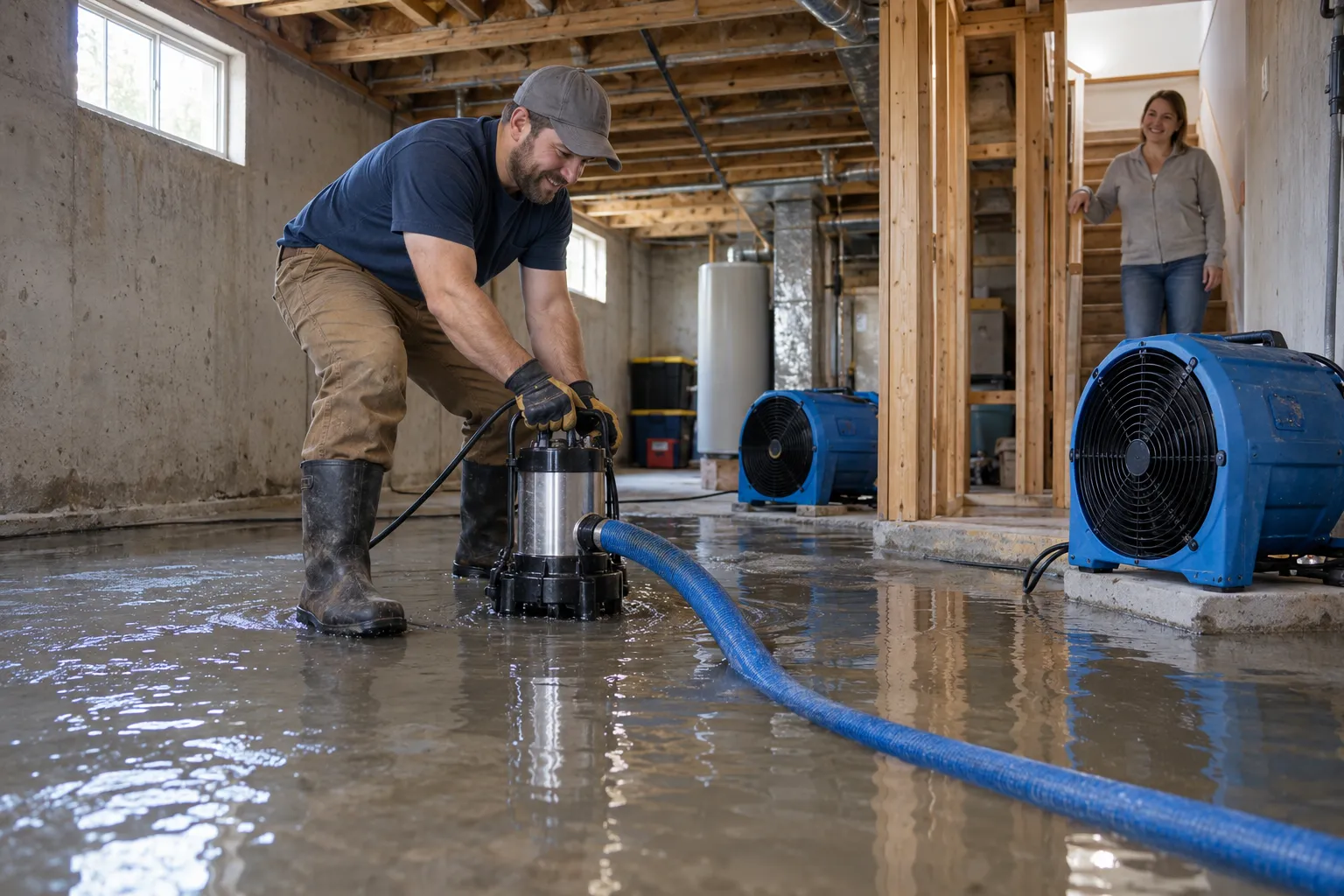
A flooded basement is scary, especially the first time. You see water on the floor and you do not know where to start. Callmonitoring Restoration is a referral service. We do not do the work. We connect you with independent local providers in our network.
This page walks you through the basics in plain words. You will learn what to do first, what cleanup includes, and what to ask a provider. Doing the job right protects the house. It also protects its value if you sell one day in Lansing.
Stay calm. Your first job is to keep people safe. The house can be risky when water is inside.
If the power is on and the water is high, leave the basement alone. Ask a licensed electrician or your utility to shut power off safely.
Not all flood water is the same. Pros sort it into three kinds.
Treat any outside flood water or sewer water as unsafe. Wear boots and gloves. Skip touching it when you can.
The source tells the provider what to do. It also tells you if the flood may come back.
In our region, common causes include spring flooding, heavy storms, and a sump pump that quits. A sump pump is a small pump in a pit. It moves water out of the basement. Other causes include a burst pipe, a failed water heater, and a cracked foundation wall.
Take a quick look. Is water coming through the wall, up from the floor drain, or down from above? Write it down. Take photos from a safe spot.
Basements are cool, dark, and hard to air out. That makes them a good home for mold. Mold can start to grow in a day or two when materials stay wet.
Water also soaks into drywall, wood, and carpet. The longer it sits, the deeper it goes. Hot, humid summers make this worse.
So move fast. Many providers can respond quickly, but availability varies. Request a callback to check provider availability near you.
Do what you can without risk.
If the flood is from a storm, the water may still be rising. Wait until it is safe before you go down.
Here is the usual flow. Each provider does it a bit differently.
The provider uses pumps to move standing water out. Then stronger tools pull up what is left.
Soaked carpet, pad, and low drywall often have to go. Cutting them out stops hidden damp spots.
Providers wash floors and walls. They use cleaners made to kill germs, mostly after gray or black water.
Big fans and dehumidifiers pull moisture from the air and from the structure. Providers use meters to check that it is truly dry.
An unfinished basement has bare concrete and open walls. It dries faster and costs less to fix. Cleanup is often mostly pumping, washing, and drying.
A finished basement has drywall, trim, flooring, and maybe a bathroom. Water hides behind those walls. The provider may need to open walls to dry the wall cavity. That is the empty space inside the wall.
Many older frame homes, bungalows, and ranch homes have finished lower levels. Ask the provider to check behind walls, not just on top of the floor.
Sort things into three piles: keep, clean, and toss.
Photograph everything before you toss it. Keep a list. You may need it later.
Some policies may cover sudden damage. Others do not cover flood or sewer backup unless you add extra coverage. Check your policy and ask your agent.
Providers can often help document damage for a claim. Keep photos, receipts, and notes in one folder.
Once the space is dry, the next step is repair. That may mean new drywall, paint, and flooring.
Do not rush this part. Closing up damp walls can trap moisture. Ask the provider for dry readings before anyone rebuilds.
Then fix the cause. A new sump pump, a battery backup, or better grading outside can lower the odds of a repeat.
Buyers ask about past water. A job done right, with records, helps you show the problem was fixed. Keep the invoice, the drying logs, and the photos. Dry it right, and the house keeps its worth.
Pumps and extractors pull water off the floor so drying can start.
Soaked carpet, pad, and damaged drywall come out to stop hidden damp spots.
Floors and walls get washed with cleaners made to handle germs from dirty water.
Fans, dehumidifiers, and meters help confirm the space is dry.
Costs depend on water depth, water type, and basement size. These are typical U.S. ranges only. Always get a written quote from the provider before work begins.
| Item | Typical range | Notes |
|---|---|---|
| Water removal | $300 – $1,500 | Depends on depth and square footage |
| Drying equipment | $500 – $2,500 | Based on days of use and number of fans |
| Carpet and pad removal | $200 – $1,200 | Size of the room matters |
| Drywall cut-out | $500 – $3,000 | Higher if walls are finished |
| Cleaning and sanitizing | $300 – $2,000 | Higher for sewer or outside flood water |
| Mold testing or cleanup | $500 – $4,000 | Only if mold is found |
Stay clear of power and deep water. Take photos from a safe spot.
Request a callback to check provider availability, or fill out the request form.
Share what happened. Ask your questions and get a written quote.
The provider cleans and dries the space. Then you plan any repairs.
Each step is explained simply, so a first-timer knows what is going on.
You reach independent providers in our network who know the area's storms and spring floods.
Request an estimate and compare. You choose whether to hire a provider.
Good drying and records help protect the house and its resale value.
Request an estimate or ask a question. Callmonitoring Restoration will connect you with an independent local provider in the Greater Lansing area. No obligation.
Stay safe first. Keep out if water touches outlets, cords, or the panel. Shut off the main water valve if a pipe broke. Take photos, then reach out to a local provider. Do not walk through deep water or run regular vacuums.
It depends on how much water came in and what got wet. Pumping can take hours. Drying often takes several days. Finished basements usually take longer because walls and floors need to dry fully.
It depends on the policy and the cause. Some policies may cover sudden damage, but many exclude flood or sewer backup. Check your policy and ask your agent. Providers can often help document damage.
Request an estimate or ask a question. Callmonitoring Restoration will connect you with an independent local provider in the Greater Lansing area. No obligation.
No obligation