Need water damage restoration in Lansing?
Request an estimate or ask a question. Callmonitoring Restoration will connect you with an independent local provider in the Greater Lansing area. No obligation.
No obligation
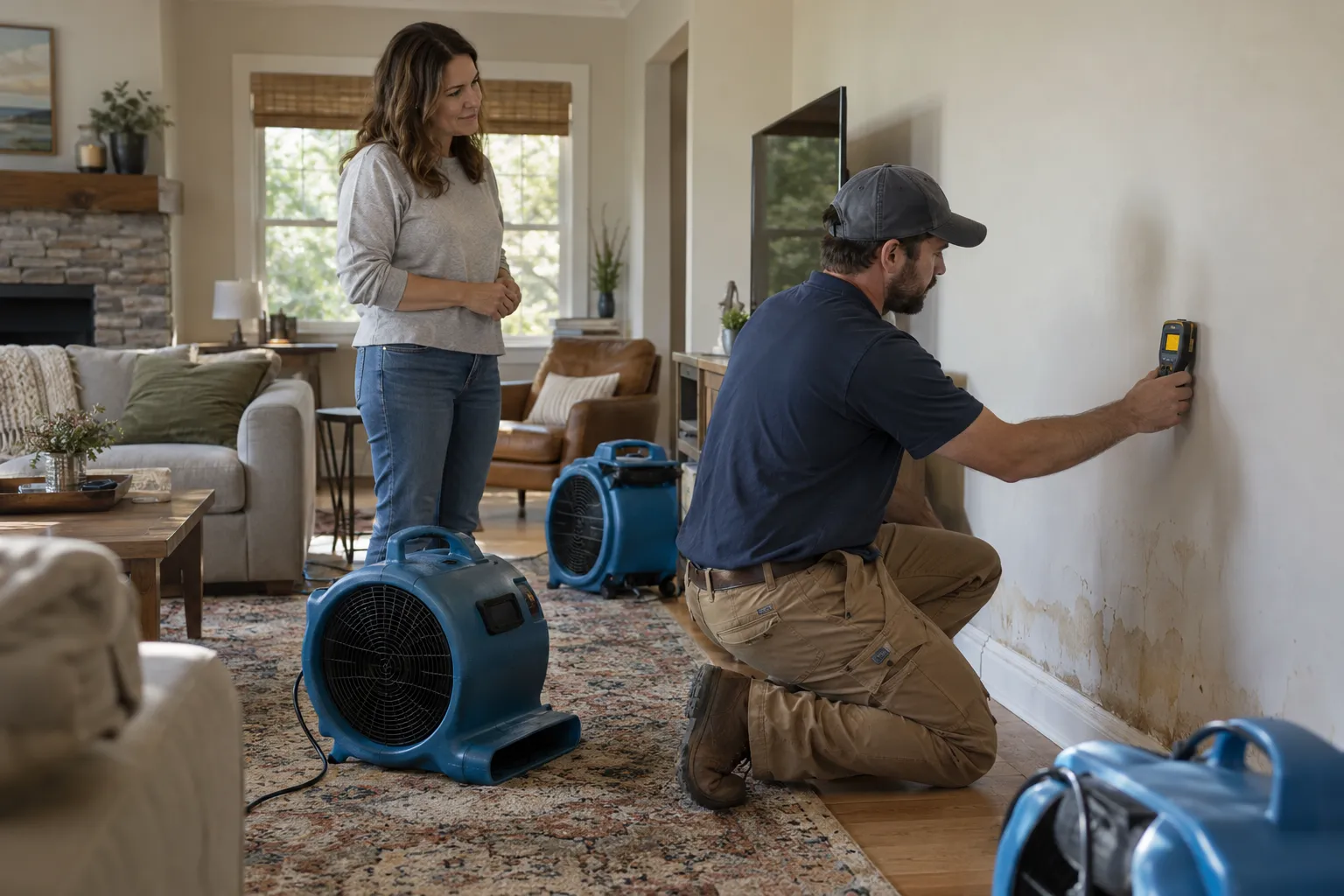
Water damage restoration means drying your home and fixing what the water hurt. It covers pulling out water, drying walls and floors, cleaning, and repairs. A burst pipe, a failed sump pump, a hail storm leak, or spring flooding can all start the problem.
Callmonitoring Restoration is a referral service. We do not do the work. We connect you with independent providers in our network near Lansing. We explain each step in short, simple words, so a first-timer knows what to expect. You can also learn what to ask, what to photograph, and how to read a written quote. Doing the job right also protects the house and its value when you sell someday. Dry it right the first time.
You just found water where it should not be. Take a breath. This page walks you through it in plain words.
Water damage restoration means drying out your home and fixing what the water harmed. Independent providers in our network do that work. Callmonitoring Restoration does not. We help you find one and know what to expect.
Safety comes before anything else. Do these things in this order:
If you feel unsure about the power, wait for a pro. Your safety matters more than the carpet.
Wet drywall, wood and carpet soak up water like a sponge. The longer they stay wet, the more they swell, warp and stain.
Mold can start to grow in a day or two. In our hot, humid summers, it can grow even faster. Mold is a fungus that feeds on damp materials. It can hurt your air and your home's value.
So move fast, but stay calm. Many providers can respond quickly. Availability varies, so ask.
You can help a lot before anyone arrives.
Keep a list of what got wet. You will want it later.
A good job has several parts. A provider may:
A moisture meter is a small tool that reads how wet a surface is. Ask the provider to show you the readings.
Not all water is the same. Pros sort it into three kinds.
Clean water turns worse with time. After a day or two, it can act like gray water. Spring flooding is often black water, so keep kids and pets away.
Some policies may cover sudden damage, like a burst pipe. Many do not cover slow leaks or flood water. Flood coverage is often a separate policy.
Read your policy or ask your agent. Providers can often help document damage for a claim. Your photos help too.
You do not have to guess. Ask each provider these questions:
Be careful with anyone who asks for all the money up front. Ask for the scope of work in writing.
A surface that looks dry may still be wet inside. Water hides in wall cavities, under floors and behind trim. Many frame houses from past decades have tight spaces where moisture stays.
If it stays, mold and rot can follow. That can hurt your home's value and cause trouble at resale. Buyers and inspectors look for water history. Good records show the job was done right.
Most jobs follow a simple path. First, the provider checks the damage and removes water. Next, drying equipment runs for several days. The provider checks moisture each day. When readings reach normal, the equipment goes. Then comes cleaning and repair.
The repair phase can take longer than the drying. Plan for noise and fans in your home for a while.
At the end, ask for a final moisture report and a list of what was done. Keep it with your house papers. Keep your photos, quotes and receipts too.
Watch for musty smells or new stains over the next weeks. If you see them, tell the provider early.
A little care can prevent a repeat. Test your sump pump each spring. Clear gutters and aim downspouts away from the walls. Check hoses on washers and water heaters. Look at your roof after hail storms.
When you are ready, request an estimate. There is no obligation. Or Request a callback to check which providers near you have availability.
Pumps and wet vacuums pull standing water out of rooms, so drying can start on floors and walls.
Fans and dehumidifiers pull moisture from wood, drywall and air until readings are normal.
Providers clean surfaces and treat affected areas to reduce germs, odors and mold risk after water.
Damaged drywall, flooring and trim get replaced, so your home looks right and keeps its value.
Prices depend on how much water there is, how long it sat, and what it touched. These are typical U.S. ranges. Your job may cost more or less, so always get a written quote.
| Item | Typical range | Notes |
|---|---|---|
| Small leak cleanup | $400 – $1,500 | One room, clean water, caught early |
| Water removal | $300 – $1,200 | Pumping and extracting standing water |
| Drying equipment | $800 – $3,000 | Fans and dehumidifiers over several days |
| Drywall and insulation repair | $500 – $2,500 | Depends on wall area and finish work |
| Flooring replacement | $1,000 – $6,000 | Carpet is cheaper; hardwood costs more |
| Whole-area restoration | $3,000 – $15,000 | Several rooms or gray or black water |
Stay clear of wet electrical items, shut off the water source if you can, and take photos.
Request a callback to check provider availability, or request an estimate and describe what happened.
The provider finds hidden moisture, removes water, and sets up drying equipment in the home.
Damaged parts get replaced, and you get a moisture report to keep with your records.
We explain each step in short, simple words, so you know what the provider is doing and why.
You get connected with independent providers near you who know local weather, basements and older homes.
Requesting an estimate carries no obligation, so you can compare options at your own pace.
A proper dry-out helps guard your home's condition and its value for future resale.
Request an estimate or ask a question. Callmonitoring Restoration will connect you with an independent local provider in the Greater Lansing area. No obligation.
Drying often takes several days, depending on how much water there was and what it soaked. Repairs can add days or weeks. A provider can give you a clearer timeline after checking.
Some policies may cover sudden damage, like a burst pipe. Slow leaks and flood water are often excluded. Check your policy, and ask your agent before you file.
Small spills, yes. For larger water, hidden moisture can stay in walls and floors and lead to mold. A provider has tools to find and remove it.
Request an estimate or ask a question. Callmonitoring Restoration will connect you with an independent local provider in the Greater Lansing area. No obligation.
No obligation