Need water extraction & structural drying in Lansing?
Request an estimate or ask a question. Callmonitoring Restoration will connect you with an independent local provider in the Greater Lansing area. No obligation.
No obligation
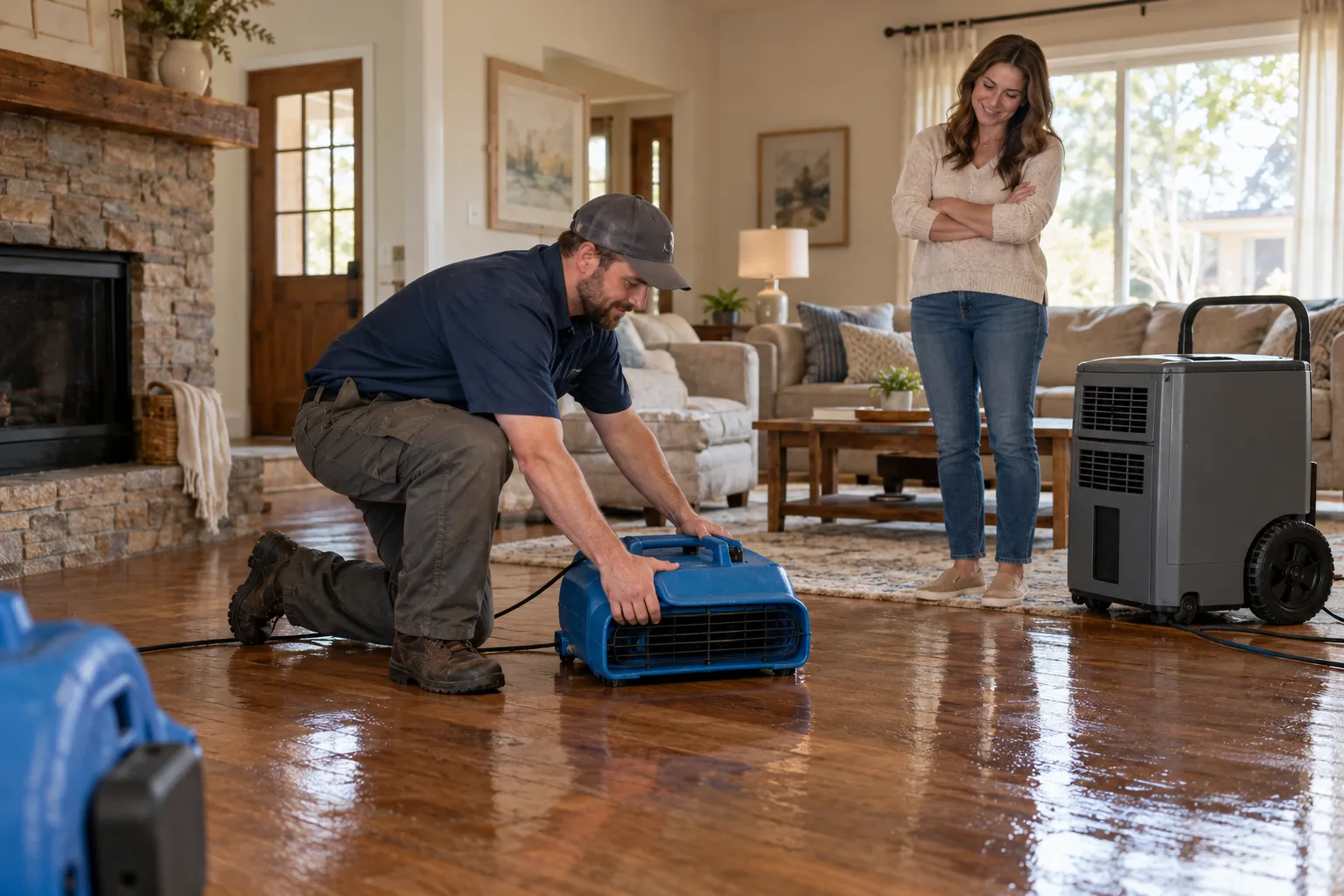
Water extraction means pulling standing water out of your home with pumps and strong vacuums. Structural drying comes next. It dries the parts that hold your house up, like floors, wall frames and subfloors. Both steps matter. Skip one, and trouble can grow behind the walls.
Callmonitoring Restoration is a referral service. We do not do the work. We connect you with independent providers in our network near Lansing. We explain each step in plain words, so a first-timer knows what to expect. You can request an estimate, ask questions, and choose the provider that fits your home and your budget.
You walk in and see water on the floor. Your heart sinks. Take a breath. Many homeowners have stood right where you are, and there is a clear path forward.
The goal has two parts. First, get the water out. Second, dry everything it touched. Local providers in our network do both jobs, and we will walk you through each one.
Water and power are a bad mix. If the water is deep or touches outlets, stay out. Turn off power at the breaker box only if you can reach it while dry. If you cannot, wait for a licensed electrician or your power company.
Also watch for slick floors and weak ceilings. A ceiling that sags with water can fall. Keep kids and pets away.
Extraction is the first big job. Providers use pumps and wet vacuums to pull standing water out of rooms. Think of it as emptying the tub before you dry the tub.
Small spills may need only a wet vacuum. A deep flood may need a strong pump. The provider picks the tool based on how much water is there.
Wet building materials soak up water like a sponge. The longer they stay wet, the more they swell, warp and stain. Mold can start to grow in a couple of days in warm, humid air.
Many providers can respond quickly, but availability varies. That is why it helps to act early.
The steps are simple. A provider checks where the water came from and where it went. Then they set up pumps or vacuums and work from the deepest spots outward.
They also look for hidden pockets. Water can slip under floors and into wall bottoms. A good provider checks those places, not just the surface.
Structure means the parts that hold up your home. That includes wood studs, subfloors, joists and drywall. These parts stay damp long after the puddles are gone.
Structural drying removes that hidden moisture. It is slow, steady work. It is also the step that most protects your home.
These are strong fans set low to the floor. They blow air across wet surfaces so water can leave them faster.
These machines pull moisture out of the air. Dry air then pulls more water out of walls and floors. Both tools work together.
Providers use a meter to check how wet a wall or floor is. The meter shows numbers, so no one has to guess. Ask to see the readings.
Most jobs take a few days. Big floods, thick wood or damp, humid weather can add time. Hot, sticky summers slow drying because the air already holds a lot of water.
The job is done when the readings match dry parts of your home. It is not done because the room feels dry to the touch.
Small steps help. You can do these safely:
Keep a list of damaged items. Providers can often help document damage for a claim. Some policies may cover sudden damage, so check your policy.
A home that dries fully keeps its worth. A home that dries only on the surface can hide rot, odor and mold. A buyer's inspector may find those problems years later.
Keep your paperwork, your photos and your moisture readings. They show the job was done right. That record can help when you sell.
Storms, spring flooding and cold snaps with deep frost can all send water into a home. Full basements with sump pumps can fill when the pump fails. Older frame houses may have gaps where water sneaks in.
Tell the provider how the water got in. It helps them plan the job.
You do not need to know the trade. Just ask clear questions:
A good provider answers in plain words. If you feel rushed or confused, ask again or request another estimate.
You do not have to solve this alone. Request an estimate, or Request a callback to see who is available near you. Then dry it right and protect the house.
Pumps and wet vacuums pull water out of rooms, basements and crawl spaces so drying can start.
Meters find damp spots inside walls and floors.
Air movers and dehumidifiers work together to pull water from wood, drywall and air.
Providers check readings during the job and show you when your materials reach a dry level.
Prices depend on how much water got in, how long it sat and how large the area is. These are typical U.S. ranges. Always get a written quote.
| Item | Typical range | Notes |
|---|---|---|
| Small water removal | $300 – $1,000 | One room, shallow water |
| Larger flood extraction | $1,000 – $4,000 | Deep water or several rooms |
| Drying equipment, per job | $800 – $3,000 | Depends on days of use |
| Moisture checks and mapping | $100 – $500 | Often part of the total |
| Wet drywall or carpet removal | $500 – $2,500 | Only if too wet to save |
| Whole-home drying project | $3,000 – $10,000+ | Large or long-wet damage |
Stay out of deep water, avoid wet outlets and keep family and pets away from damage.
Request a callback to check provider availability or request an estimate.
The provider pumps and vacuums standing water, then checks for hidden wet spots.
Fans and dehumidifiers run until moisture readings show your home is dry.
We explain each step in simple words, so a first-timer knows what is happening.
Independent providers in our network work near you.
Request an estimate, compare options and pick the provider that fits your home.
Our advice aims to protect your home and its long-term value.
Request an estimate or ask a question. Callmonitoring Restoration will connect you with an independent local provider in the Greater Lansing area. No obligation.
Extraction removes standing water with pumps and vacuums. Structural drying comes after. It uses fans and dehumidifiers to pull hidden moisture from floors, wall frames and other parts of the house.
Many jobs take a few days. Deep floods, thick wood and humid weather can add time. The provider checks moisture readings and stops only when your materials reach a dry level.
Fans help with a small spill, but they often miss moisture inside walls and under floors. Hidden dampness can lead to mold, so ask a local provider to check with a moisture meter.
Request an estimate or ask a question. Callmonitoring Restoration will connect you with an independent local provider in the Greater Lansing area. No obligation.
No obligation